Halloween is useful to me because it is honest about play. For one evening the costume is allowed to be a costume. The rest of the year, the same ideas about cowboys, princesses, soldiers, and brides show up as ordinary clothes and get called natural. A Sears costume page from the late 1950s puts the lesson in one place: hats, guns, wands, and aprons, each tied to a kind of child. I have written about the cowboy version in playing cowboy in the 1950s. The costume counter is the same lesson with the price tag still attached.
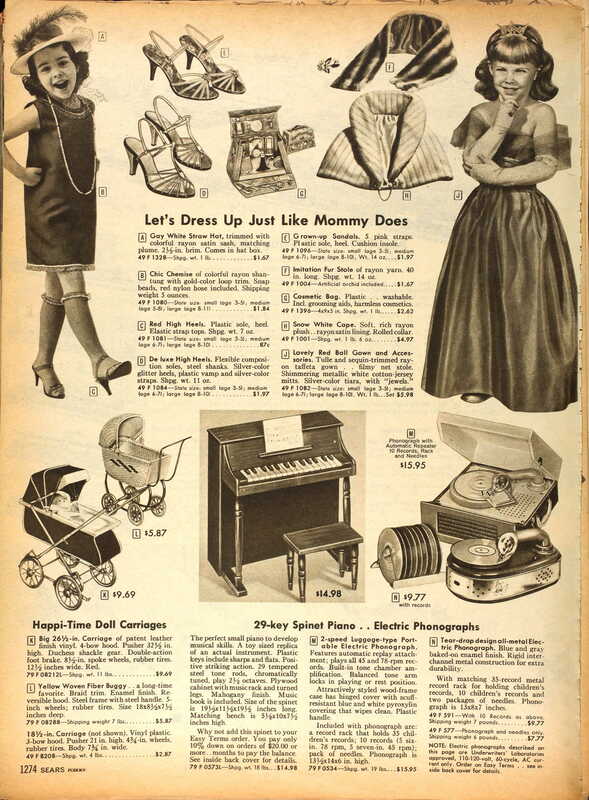
Sears, fall 1959, when cowboy suits and princess dresses shared a season.
Store-bought costumes matter more, for this research, than the homemade sheet ghost. A parent with scissors can ignore the catalog. A parent with a catalog and a Saturday deadline is offered a short menu. That menu is where I can see which roles were easy to buy and which roles required extra work. Cowboy and Indian suits, nurse and doctor kits, bride dresses, animal suits: the stock changes by decade, and the sex labels change with it. In some years a devil suit is listed once, for any child. In others the devil is a boy and the cat is a girl, with no argument offered, only two boxes.
The interesting failures are the costumes that cross. A girl in a cowboy hat is visible in photographs long before she is comfortable in the copy. The catalog may show her, then tuck her into a smaller frame, then drop her. When she remains, the caption sometimes explains her, as if the picture were a problem. Those explanations are gold. They tell me the boundary was visible to the seller, which means it was visible to the buyer.
I do not treat Halloween as a harmless exception. Children rehearse. A costume worn at six becomes a memory of what felt allowed. The rehearsal is louder than a Tuesday romper, and it is sold next to the Tuesday romper in the same fall book. If you are cataloging a costume page, use the same steps as any other garment: words first, then props, then who is missing. The method is written out in how to read a catalog romper. Older posts on dress-up sit on the home page under the archives.
One caution: a costume photograph in a family album is not a catalog. The child may have refused the purchased plan. I like those refusals, and I try not to smooth them into the retail story. The retail story is what was for sale. The album is what happened. Both belong in the notes, in different columns.