People send me photographs of children and ask what the clothes prove. Sometimes they want a decade. Sometimes they want me to confirm a family story about a boy in a dress or a girl in pants. The photograph cannot do that work alone. These are the five questions I write on a pad before I answer. They are plain on purpose. If I skip one, I start inventing.
When was it made, and who says so?
A studio mark, a postcard back, a birthday written in ink: those date the object. Clothing fashion dates it only as a range, and children's clothes lag behind adult styles. If the only date you have is your own guess from the hemline, say so. I would rather put "late 1910s, uncertain" than a false year that later gets cited.
A studio mark, a postcard back, a birthday written in ink: those date the object. Clothing fashion dates it only as a range, and children's clothes lag behind adult styles. If the only date you have is your own guess from the hemline, say so. I would rather put "late 1910s, uncertain" than a false year that later gets cited.
Who chose the clothes for the picture?
A studio portrait is a collaboration between the photographer's stock poses and the adult who dressed the child. It is weak evidence of what the child wore to school. A snapshot in a yard is stronger for daily dress and weaker for the names of garments. I ask which kind of picture I am holding before I talk about norms. The retail side of those norms is in white layettes, then pink and blue.
A studio portrait is a collaboration between the photographer's stock poses and the adult who dressed the child. It is weak evidence of what the child wore to school. A snapshot in a yard is stronger for daily dress and weaker for the names of garments. I ask which kind of picture I am holding before I talk about norms. The retail side of those norms is in white layettes, then pink and blue.
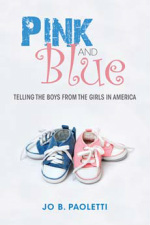
Pink and Blue. The questions above are the short version of the method.
What does any writing on the object claim?
Captions lie, and they also preserve words the wearers used. "Brother and I" on the back of a photo settles a question the clothes may leave open. "Our boy" written by a proud parent is not the same as a catalog caption. Read the handwriting as a source, then read the garment as another source, and let them disagree if they disagree.
Captions lie, and they also preserve words the wearers used. "Brother and I" on the back of a photo settles a question the clothes may leave open. "Our boy" written by a proud parent is not the same as a catalog caption. Read the handwriting as a source, then read the garment as another source, and let them disagree if they disagree.
What was the occasion?
Sunday, school, mourning, a pageant, a first day in long pants: occasion changes the rules. A white dress on a small child at a christening is not the same garment as a white dress in a play yard. Halloween, which I take up in Halloween costumes and gender, is an occasion that announces itself. Most days do not.
Sunday, school, mourning, a pageant, a first day in long pants: occasion changes the rules. A white dress on a small child at a christening is not the same garment as a white dress in a play yard. Halloween, which I take up in Halloween costumes and gender, is an occasion that announces itself. Most days do not.
Who is cropped out, and what did I want to see?
I include this last question because it is about me, not about the child. If I came to the photo hoping for a tomboy or a pink boy, I will find one too quickly. The cure is to list what the picture does not show: shoes, haircut, the other children, the adult's hand at the edge of the frame. My notes on learning to be white started from a similar discomfort with an easy story.
If the photograph still will not answer, it belongs in the folder of unfinished evidence. That is a respectable outcome. More of these notes are on the blog.
I include this last question because it is about me, not about the child. If I came to the photo hoping for a tomboy or a pink boy, I will find one too quickly. The cure is to list what the picture does not show: shoes, haircut, the other children, the adult's hand at the edge of the frame. My notes on learning to be white started from a similar discomfort with an easy story.
If the photograph still will not answer, it belongs in the folder of unfinished evidence. That is a respectable outcome. More of these notes are on the blog.